
This page contains affiliate links. We may earn a commission at no extra cost to you.
As of this month, the six lash serum ingredients to avoid or question show up on labels and sales pages again and again. A serum label can tell you more about a brand’s honesty than any before-and-after photo, if you know which six things to check before you buy.
Key Takeaways:
- Six red flags cover most problem labels: hidden prostaglandin analogues, missing concentrations, fragrance and irritants, overstated claims, vague ‘proprietary blend’ wording, and no full ingredient list.
- Ingredient lists run in descending order of amount, so an active named near the bottom of a list is likely present in a very small dose.
- A 5 mL eyelash serum with a named ingredient list but no concentrations, like Miracle Lash, passes the safety checks on this page and falls short on one: you can see what is in it, not how much.
Quick Answer: 6 Red Flags on a Lash Serum Label
- Hidden prostaglandin analogues: a drug-class ingredient that is missing from the label or hidden behind a ‘natural’ claim is the one flag to avoid outright.
- Missing concentrations: a named active with no amount tells you little about whether it can do anything.
- Fragrance and irritants: scent, essential oils and alcohol-heavy formulas are poor fits for the thin skin of the eyelid.
- Overstated claims: promises of regrowth or guaranteed percentage gains deserve a hard look.
- Vague blend wording: ‘proprietary blend’ or ‘complex’ hides what is inside and in what amounts.
- No full ingredient list: if you cannot find the list, you cannot judge the product.
Which lash serum ingredients should you avoid or question?

Eyelash serum red flags fall into six categories you can check before buying, and the checklist takes under 30 seconds to run. If you are weighing up the Miracle Lash, read the verdict first.
- Hidden prostaglandin analogues. A drug-class ingredient that is not shown on the label is the most serious flag, especially for anyone choosing a serum to avoid that class.
- Missing concentrations. A label that names an active without an amount leaves you guessing about the dose.
- Fragrance and irritants. Scent, essential oils and harsh preservatives raise the odds of stinging near the eye.
- Overstated claims. Words like ‘regrows’ or a guaranteed percentage gain promise more than a conditioning serum can show.
- Vague ‘proprietary blend’ or ‘complex’ wording. These terms hide individual ingredients and their amounts.
- No full ingredient list at all. Without the list, nothing else can be checked.
There is a difference between the two verbs in the title. Avoid means an undisclosed drug-class ingredient, which is a reason to walk away. Question means a vague claim that deserves a follow-up before you pay. The sections below take each flag in turn, and the list works on any serum, including the one this site reviews in its Miracle Lash reviews.
How do you read a lash serum label?
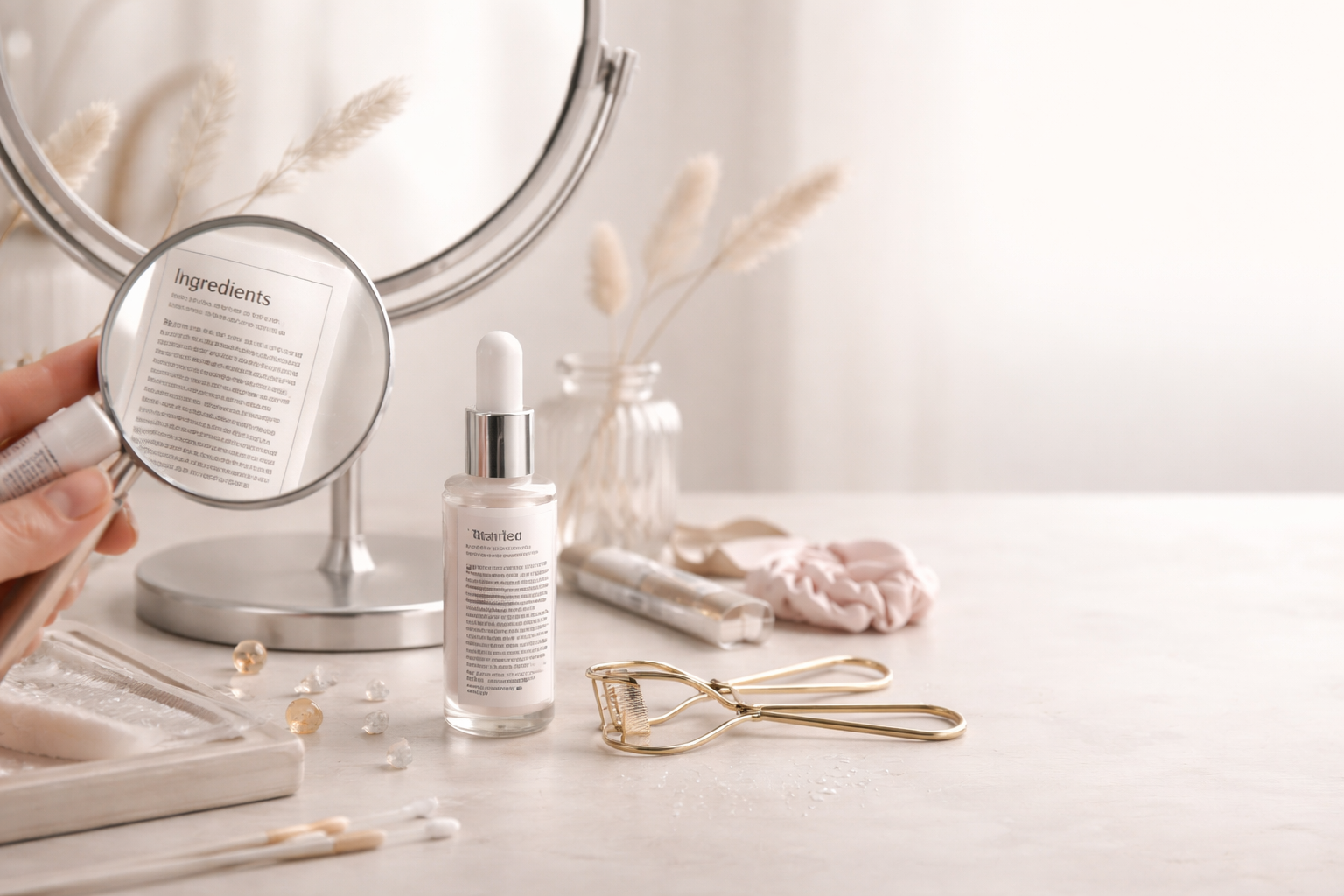
Ingredient list order reveals the relative amount of each ingredient, which makes the list a better guide than the front of the box. Cosmetics labels follow a general convention of naming ingredients from the highest amount to the lowest.
- Find the full ingredient list. Look on the box or the product page, not only in the marketing copy, because a highlights panel is not a list.
- Read from the top. The first ingredients make up most of the formula, and the last ones make up very little.
- Note where the named active sits. Compare its position with common fillers like glycerin and Vitamin B5, which sit in many conditioning formulas.
- Check whether the list is complete. A list with three or four names and no ‘and other ingredients’ line may be a highlights panel in disguise.
A common assumption is that a hero ingredient printed on the front of the box means a meaningful dose. The reality is that front-of-box wording is marketing, and list position is a better clue to how much is inside.
Can a lash serum contain hidden prostaglandins?
Undisclosed prostaglandin analogues can appear in serums that market themselves as gentle or natural. Regulators in several countries have flagged cosmetic products containing drug-class ingredients that were not shown on the label. ‘Natural’ or ‘gentle’ on the front tells you nothing about what is inside.
So what should you look for? Names ending in -prost, along with ‘isopropyl cloprostenate’, ‘prostaglandin’ and ‘bimatoprost’, mean a prostaglandin analogue is present. A ‘prostaglandin-free’ claim is only as good as the list behind it, so check the claim against the names.
This matters most for readers who picked a serum specifically to avoid that drug class. This guide does not cover how those ingredients work, since the comparison of bimatoprost vs peptide serum handles that. It also has no verified count of how many products are affected, so no figure is cited here.
One honest limit applies. A label check cannot prove an ingredient is absent. That is why a retailer and brand with a clear return policy matter.
Why do missing ingredient concentrations matter?
Unpublished ingredient concentrations prevent buyers from judging whether an active is present in a meaningful amount. A label can name Myristoyl Pentapeptide-17 without saying whether it is 0.5% or a trace, and those two cases are very different products. For background on that ingredient, see the explainer on myristoyl pentapeptide-17.
Miracle Lash is a fair worked example of a label that is less transparent than ideal. It comes as a 5 mL pen and names its key ingredients: Myristoyl Pentapeptide-17, Vitamin B5, grape stem cell extract and glycerin. It does not publish the full ingredient list or concentrations.
Be fair in both directions here. Many cosmetic brands do not publish percentages, and that alone does not mean a product fails. It does mean you rely on the return policy and buyer reports rather than the label. For Miracle Lash, the vendor states a 365-day money-back guarantee, which is the practical backstop if the amounts matter to you.
Red flag comparison: what a clear label looks like versus a vague one
A clear lash serum label discloses full ingredients, amounts and honest claims, while a vague one leaves gaps in each. This table sets the six checks side by side.
| Check | Clear label | Red flag |
|---|---|---|
| Full ingredient list | Every ingredient named on the box and product page | Only a few ‘key’ ingredients named, or no list found |
| Concentrations of named actives | Percentages stated for each active | Actives named with no amount, or ‘proprietary blend’ |
| Prostaglandin status | No -prost names, and the list backs the claim | ‘Prostaglandin-free’ stated but the list is missing or partial |
| Fragrance or essential oils near the eye | Unscented, no essential oils | Perfume, essential oils or heavy alcohol |
| Claims about growth or results | Gradual, modest wording | ‘Regrows lashes’ or guaranteed percentage gains |
| Return policy | Clear terms and a stated window | No policy, or terms buried in fine print |
Keratin support is a good example of marketing wording to question. It describes an intended effect, not an ingredient. When you see it, ask which listed ingredient does that job and at what amount. If the label cannot answer, the phrase is decoration.
Do fragrance, irritants and overstated claims belong on a lash serum label?
Fragrance and irritants raise the risk of stinging and redness on the thin skin of the eyelid, so they are worth questioning on any eyelash serum. Perfume, essential oils, alcohol-heavy formulas and harsh preservatives all fall in that group, and the concern grows if you have sensitive eyes. The Miracle Lash label is unscented, and several verified buyers call it one of the gentlest serums they have tried. Two buyers reported stinging or irritation when it got in the eye, and one reported a stye. Its Amazon rating stood at 3.8 out of 5 from 56 ratings as of Oct 2026.
Overstated claims are the second flag in this passage. Phrases like ‘regrows lashes’, ‘clinically proven’ with no study named, or guaranteed percentage gains are claims to question. A slow conditioning serum should promise gradual, modest change, and a brand that promises more is selling hope. For realistic timing, see the notes on how long Miracle Lash lasts and the buyer reports behind it.
If you see persistent redness or irritation, stop using the product and ask an eye doctor.
What the six flags add up to
The six checks work as one routine: read the full list, read it top to bottom, scan for prostaglandin names, look for amounts, skip fragrance, and discount big promises. A serum with a clear list and honest claims earns more trust than one with a striking before-and-after photo. Thinning lashes can have many causes, and the piece on why do eyelashes thin with age covers what a serum can and cannot address. If a serum has worked poorly for you, the notes on lash serum for mature lashes cover next steps, and the article on vitamin B5 for eyelashes explains what a common ingredient on these labels can reasonably do.
Frequently Asked Questions
Is grape stem cell extract a red flag in an eyelash serum?
Not by itself. Grape stem cell extract is a plant-derived conditioning ingredient, and finding it on a label is not a warning sign. The question to ask is the same as for any named active: is the amount published, and does the brand claim more than a conditioning ingredient can reasonably deliver?
Does a ‘proprietary blend’ on a lash serum label mean something is being hidden?
It means you cannot see the individual ingredients or their amounts, which makes the product harder to judge. A blend is not proof of anything harmful, but it is a reason to lean on the return policy and independent buyer reports instead of the label. A full ingredient list is the better sign.
What should you do if a lash serum irritates your eyes?
Stop using it, rinse the area with clean water, and check the ingredient list for fragrance or other irritants. If redness, swelling or discomfort lasts, see an eye doctor rather than waiting it out. This guide does not replace medical advice for eye irritation.