This page contains affiliate links. We may earn a commission at no extra cost to you.
As of this year, women in their 50s still ask the same thing: why do eyelashes thin with age? Lashes that never needed help can look sparse now, and the cause is usually slow biology plus small daily habits, not anything alarming.
Key Takeaways:
- Six everyday causes explain most gradual lash thinning: a slowing growth cycle, hormone shifts, rubbing, harsh makeup removal, mascara and extension wear, and lash perms.
- Three habits cut breakage fastest: gentle oil-free makeup removal, no rubbing, and rest days from extensions or heavy mascara.
- Sudden, patchy or one-sided lash loss is the one pattern that calls for a doctor’s check rather than a new routine.
Why are my eyelashes thinning as I get older?
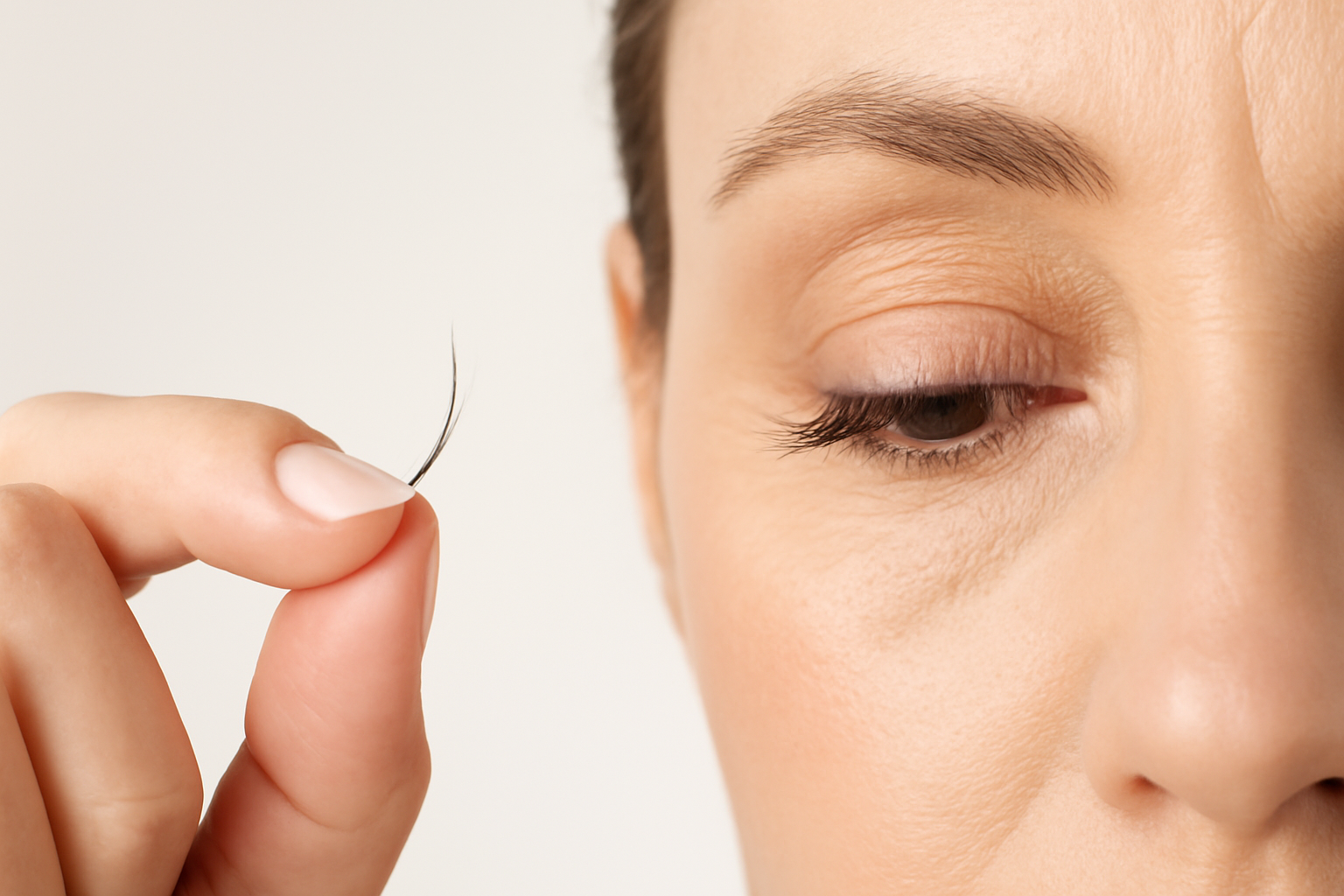
Age-related lash thinning is a gradual drop in lash fullness that comes from a slowing growth cycle and more fragile individual lashes. This means the change usually builds over years, not weeks. If you are weighing up the Miracle Lash, read the verdict first.
Each lash follows a cycle of growing, resting and shedding. A lash’s growth phase lasts roughly 30 to 45 days, then it rests and sheds, so a full cycle runs about 2 to 3 months. Those are commonly cited ranges, not exact figures for every person. With age, lashes tend to spend less time growing, come in finer and snap more easily.
Two problems often get blurred together. Fewer lashes means shedding without replacement. The same number of lashes that look shorter or brittle means breakage. The fixes differ, so it helps to know which one you are seeing in the mirror.
Gradual thinning is common and rarely a sign of disease. The six causes below are the slowing cycle, hormones, rubbing, harsh makeup removal, mascara and extension wear, and lash perms.
Does menopause affect eyelashes, and what changes in your 50s?
Hormone shifts around menopause can plausibly make lashes finer, shorter and slower to regrow. Hair across the body often thins and changes texture in these years, and lashes are hair.
The limits matter here. The link is commonly described, but individual responses vary, and hormones are rarely the only cause. No hard percentage exists for how many women notice lash changes around menopause, so figures you see quoted online deserve some caution.
Dryness adds a second layer. Eyes tend to feel drier and more sensitive in these years, which can mean more rubbing, and rubbing snaps lashes that are already fragile. Thyroid changes also show up at this age and can affect lashes, which is one reason a doctor’s check is worth it when changes are marked. None of this promises that anything reverses it. It explains why the 50s can feel like a turning point.
Which 6 everyday causes thin lashes the most?
Rubbing, harsh makeup removal, mascara, extensions and lash perms all increase lash breakage on top of natural thinning. The first two rows below are biology. The other four are habits you can change.
| Cause | How it thins lashes | Fixable? |
|---|---|---|
| 1. Slowing growth cycle | Lashes grow for a shorter time and come in finer | Natural; conditioning may help lashes look better but cannot stop it |
| 2. Hormone shifts | Lashes can turn finer, shorter and slower to regrow | Natural; discuss with a doctor if marked |
| 3. Eye rubbing | Friction snaps brittle lashes at the root or mid-shaft | Yes, mostly habit |
| 4. Harsh or oily makeup removal | Scrubbing and tugging at waterproof mascara pulls lashes out | Yes, swap the method |
| 5. Mascara and lash extension wear | Glue and extra weight strain the natural lash; clumpy removal tugs | Yes, with breaks and gentler removal |
| 6. Lash perms and curlers | Heat and chemicals can leave lashes dry and brittle | Yes, space them out or skip |
Most women find at least two of these six apply to them. That is good news, because habits are the part you control.
How do you stop lash breakage with gentle daily habits?
Gentle removal, no rubbing and regular rest from heavy products reduce lash breakage. These steps cost almost nothing and work on any budget.
- Hold a cotton pad soaked in a gentle remover over the closed eye for 10 to 15 seconds, so makeup dissolves instead of being dragged off. Treat that timing as a practical guideline, not a clinical rule.
- Wipe once, downward, and never scrub back and forth.
- Choose a tube mascara or wash-off formula over heavy waterproof if removal is a struggle.
- Stop rubbing. If eyes itch or feel dry, reach for a cool compress or lubricating drops instead, and see an eye doctor if the itching is constant.
- Give lash extensions, perms and curlers regular breaks so natural lashes can recover.
- Keep a clean spoolie or a fresh tube of mascara, since clumpy, old formulas tug at lashes.
Some women add one optional step: a conditioning, prostaglandin-free eyelash serum such as Miracle Lash. (I tried a few of these myself before settling on a routine, and the habits above made more difference than any bottle.) Buyers mostly describe it as gentle, but results are gradual and subtle for many, and it costs $79, so treat it as an extra, not a fix. If you are weighing that choice against other options, the comparison of lash extensions vs lash serum covers the trade-offs, and the main Miracle Lash reviews page covers what buyers saw.
One timing note: lashes take 2 to 3 months to cycle, so any change in routine needs about that long before you judge it. If you wear contacts, the guide on lash serum with contact lenses covers safe application order, and if you wonder whether you can use mascara with lash serum, that is the next question worth reading.
When does lash thinning need a doctor’s check?
Sudden, patchy or one-sided lash loss warrants a medical opinion. Most gradual thinning is not an emergency, but these patterns are the exceptions. Book a visit with a doctor or eye specialist if you notice any of the following:
- Lashes falling out quickly over weeks rather than slowly over years.
- Bald patches, or loss on one eye only.
- Redness, swelling, crusting or scaly lid edges.
- Pain, vision changes or discharge from the eye.
- Lash loss that comes with eyebrow loss, hair loss elsewhere, fatigue or weight change, which can point to thyroid or other conditions.
- Loss that started after a new medication or a new product.
This is general guidance and does not replace a doctor’s advice. If your lashes are the issue but your eyes are calm, the next stops are the lash serum ingredients to avoid, so you know what to question on a label, and the guide on how long does Miracle Lash last, which covers real cost per month. For serums that suit older lashes in particular, see lash serum for mature lashes.
Frequently Asked Questions
Can mascara itself make eyelashes thinner?
Mascara does not usually stop lashes from growing, but waterproof formulas and hard scrubbing at removal can tug lashes out or snap them, which looks like thinning. Choosing a formula that comes off with a gentle soak and replacing mascara regularly keeps breakage down.
Do eyelashes grow back after they fall out or break?
In most cases, yes. A shed lash is replaced as the follicle cycles back into growth, which takes roughly two to three months to look noticeable. If lashes are not returning in a patch, or loss keeps repeating, a doctor’s check is the sensible next step.
Is thinning lashes in your 50s normal, or a sign of something wrong?
Gradual thinning is common in this decade and is usually linked to age, hormone shifts and everyday wear. It is worth getting checked if loss is sudden, patchy, one-sided, or comes with redness, pain or changes elsewhere in the body.